
SBP Monetary Policy Interest Rate Update 2026 Ultimate
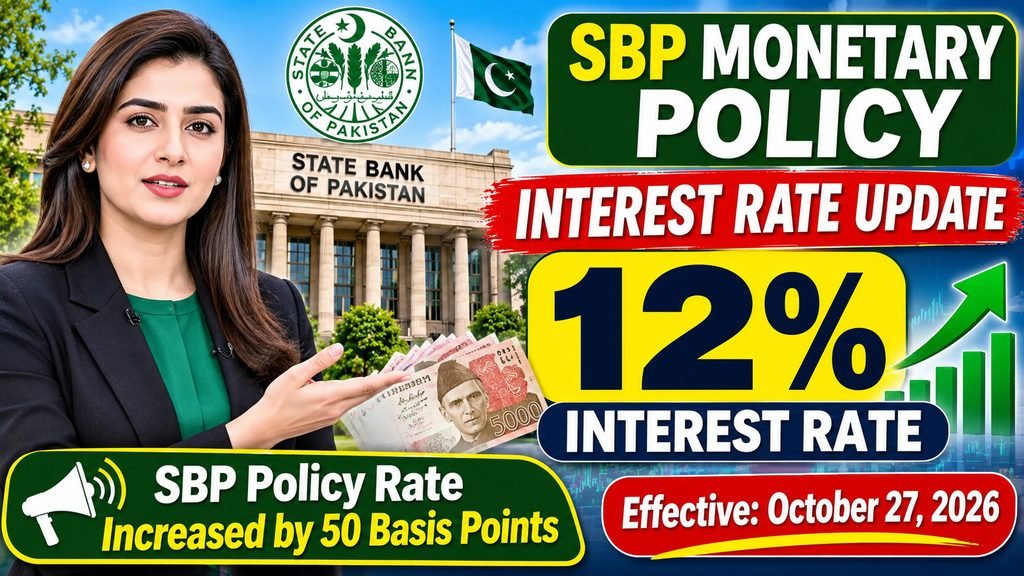
SBP Monetary Policy The State Bank of Pakistan has increased its key policy rate by 50 basis points to 12% from October 27, 2026. SBP Governor Jameel Ahmed announced the decision at a press conference in Karachi on October 26 after the Monetary Policy Committee’s third meeting of 2026 to 27 that month. SBP Monetary Policy The move marks the end of a pause at 11.5% which has lasted three meetings.
The Monetary Policy Committee said the decision to tighten monetary policy was prompted mainly by the intensification of the Middle East conflict elevated global energy prices and the inflation outlook that has worsened. SBP Monetary Policy What does this mean for the common man? The increased rate means among other things that borrowing will be more expensive for firms and households if they have any loans and that bank depositors may get a slightly better rate of return. SBP Monetary Policy We take you through the numbers the logic and the implication of the rate increase.
Background Why the SBP Raised Rates Now
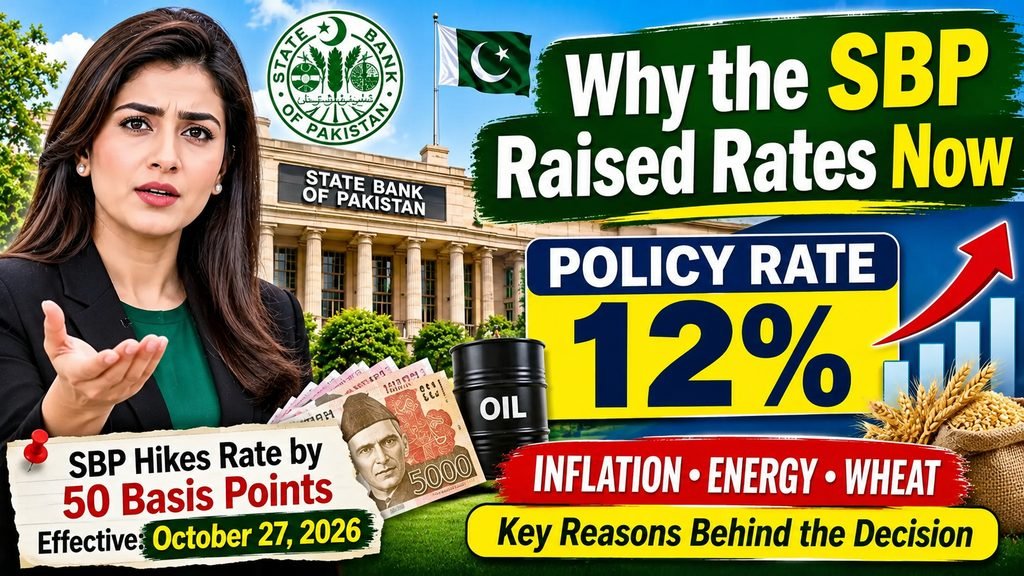
In April 2026, the MPC increased the policy rate by 100 basis points to 11.5%. Then from June to September 2026, the MPC kept the rate steady SBP Monetary Policy, awaiting clearer signs of inflation and the external account.
Conditions changed in October. In September headline inflation was 10.3% compared to last year (above the SBP’s medium term inflation target range of 5 to 7%), while core inflation remained high at around 8.4%. Renewed conflict in the SBP Monetary Policy Middle East increased global oil prices, posing a challenge to the country’s import and domestic energy prices. The MPC found it appropriate to raise rates as a pre emptive measure to counter the build-up of inflation expectations.
Key Figures Announced
- The changes in the SBP interest rate corridor by MPC decision effective 27th October 2026 are as under:
- SPB Policy (Target) Rate: from 11.50% to 12.00%
- SBP Overnight Reverse Repo (Ceiling) Rate 13.00% (100 bps high than policy rate)
- SBP Overnight Repo (Floor) Rate 11.00% (100 bps below policy rate)
- Interest Rate Corridor Width: 200 basis points
- It was supported by nine out of ten MPC members SBP Monetary Policy indicating broad consensus on the need for tightening .
Who Is Affected and How
Businesses and Borrowers
Lending rates of commercial banks are usually raised after SBP takes policy step. Those companies which are dependent on banks credit for running business purchase of machine & equipment or business SBP Monetary Policy expansion will have to pay increased interstates. Existing floating rate loan borrowers will have increased loan repayment cost. New borrowers will have to settle for tougher conditions.
Households with Loans
If you have a personal loan, car finance or a mortgage based on floating rates, your monthly repayments could go up, SBP Monetary Policy depending on the bank’s pricing decisions, and the exact nature of each of your funding agreements.
Savers and Depositors
To protect against the impact of a rise in the policy rate, banks could try to increase the return on savings accounts and fixed deposits SBP Monetary Policy although they are unlikely to do so immediately or fully. Savers should look for the best rate among banks.
Low-Income Households
The real value of BISP cash transfers and other welfare payments are not directly altered by the policy rate. Nevertheless continued inflation-especially in energy and food prices reduces the buying power of fixed stipends SBP Monetary Policy and ultimately weighs most heavily on poor households. The MPC’s decision seeks to lower inflation over the coming years.
Official Statements from the SBP
The MPC in its monetary policy statement had said it was “necessary to keep inflation expectations anchored, contain second round effects of the ongoing supply shock, and bring inflation within the target range of 5-7%.”.
SBP Governor Jameel Ahmed, who was speaking at the press briefing following the conclusion of the meeting, said that Pakistan foreign exchange reserves have increased substantially. SBP Monetary Policy “Reserves are currently about $ 21.5 billion ( three months of import cover) as compared to less than $ 3 billion in February 2023. The reserves could increase up to $ 23 billion by December 2026 and $ 25 billion in June 2027 he said.
In addition, the Governor highlighted that the reserves were accumulated via market purchases and not borrowing, noting quality of these reserves to be strong. SBP Monetary Policy The GDP growth for FY27 was estimated to be at 3.5 to 4.5%.
Comparison with Previous Policy
This October 2026 increase eliminates a slow down in monerary accommodation which started at the end of 2024. After the rate averaged 15% in November 2024, it was reduced in stages to 11% in May 2025. It then increased to 12% in April 2026, remained at 11.5% through September and has now returned to 12%.
| Meeting Date | Policy Rate | Change |
|---|---|---|
| October 26, 2026 | 12.00% | +50 bps |
| September 14, 2026 | 11.50% | No change |
| July 27, 2026 | 11.50% | No change |
| April 27, 2026 | 11.50% | +100 bps |
| December 16, 2024 | 13.00% | −200 bps |
| November 4, 2024 | 15.00% | −250 bps |
Source: Pakistan Observer timeline
Expert and Market Reaction
Financial markets had widely expected the hike. Brokerage houses such as Topline Securities had forecast a 50-basis-point hike amid “geopolitical tensions SBP Monetary Policy and uncertainty over global energy supplies”. The decision was “expected in line with the market expectations” according to Mettis Global.
“They’ve got a very difficult choice. If they raise rates to tame inflation, they could be stalling the nascent economic rebound, while if they hold rates, there is a risk that inflation pressures could become embedded” said analysts. The MPC’s statement said the economy had ‘started to register a modest growth momentum with large scale manufacturing output up 1.9% on year in July-August FY27.
What Happens Next
The next MPC Meeting is scheduled for December 14, 2026. However, the MPC will review October and November inflation oil prices SBP Monetary Policy and external account position data before any further adjustment can be made.
The MPC said in its statement that the inflation outlook remains subject to a number of risks, including geopolitical developments world commodity prices and unanticipated changes in energy tariffs as well as the extent of adverse weather events. Another rate hike could be made in December or early 2027.
For More : NSER Survey Online Check by CNIC 2026 Ultimate Amazing
Frequently Asked Questions FAQs
What is the current SBP policy rate in November 2026?
The policy rate is 12.00%, effective from October 27, 2026 .
Why did the SBP increase interest rates?
The MPC cited rising global oil prices due to Middle East tensions, inflation at 10.3% in September (above the 5–7% target), and the need to anchor inflation expectations .
Will my bank loan installment increase?
If your loan has a floating interest rate linked to KIBOR or the SBP policy rate, your repayment amount may increase. Fixed-rate loans are unaffected. Contact your bank to confirm the terms of your specific financing.
Will I earn more on my savings account?
Possibly. Banks often adjust deposit rates after a policy rate change, but the timing and extent vary. Compare rates across banks before assuming an automatic increase.
Does this affect BISP or Ehsaas payments?
No. The policy rate does not directly change welfare stipend amounts. However, lower inflation over time the goal of the rate hike would help preserve the purchasing power of those payments.
When is the next SBP monetary policy meeting?
The next MPC decision is scheduled for December 14, 2026 .
Is the SBP policy rate the same as the interest rate I pay on my loan?
No. The policy rate is the rate at which banks borrow from or deposit with the SBP overnight. Your loan rate is set by your bank and includes a spread over KIBOR or the policy rate, plus the bank’s own margins.
Conclusion
By hiking the policy rate to 12%, SBP is prioritising inflation containment even at the expense of growth in the short term. Borrowers will face higher cost of credit, small savers may see some modest returns, while the impact on the economy at large will largely depend on global energy prices stabilising and whether the rate hike manages to bring inflation closer to the 5 to 7% band. The next indicator will arrive on December 14.
Disclaimer: This report is based on official SBP announcements and published statements available as of November 2026. Monetary policy decisions, inflation figures, and economic projections are subject to revision. Readers should verify current rates and details directly on the State Bank of Pakistan’s official website (sbp.org.pk) before making financial decisions.

One Comment